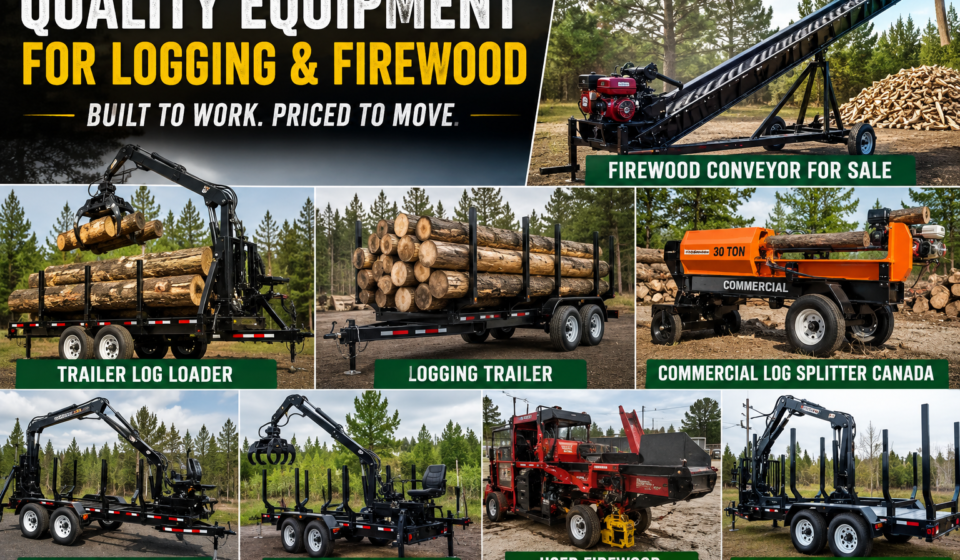

Moving heavy logs efficiently requires specialized equipment designed to handle demanding forestry tasks. A trailer log loader combines mobility with lifting capability, making it easier to transport and load timber across different job sites. Whether working on private land or managing larger logging projects, selecting the right loader can improve productivity and reduce manual effort.
Understanding the essential features, benefits, and buying considerations helps ensure you choose equipment that fits your operational requirements.
What Is a Trailer Log Loader?
A trailer log loader is a trailer equipped with a hydraulic loading system capable of lifting, moving, and positioning logs for transportation.
Rather than relying on separate machinery, operators can load timber directly onto the trailer, improving overall efficiency.
This integrated design saves time while simplifying wood handling.
Benefits of Using a Trailer Log Loader
Modern forestry operations benefit significantly from equipment that performs multiple functions.
Increased Productivity
A trailer log loader reduces the number of loading steps required during timber collection.
Advantages include:
- Faster loading
- Reduced manual labor
- Better workflow
- Improved transportation efficiency
These improvements help maximize daily output.
Better Mobility
Because the loader travels with the trailer, operators can work across multiple locations without transporting separate loading equipment.
This flexibility makes field operations more efficient.
Important Features to Consider
Every trailer log loader offers different specifications. Understanding the most important features simplifies the buying process.
Hydraulic Performance
Strong hydraulic systems provide smooth lifting and precise control.
Reliable hydraulics improve:
- Lifting efficiency
- Operating speed
- Positioning accuracy
- Overall productivity
Consistent hydraulic performance contributes to safer operations.
Boom Reach
A longer boom allows operators to access logs without repositioning the trailer frequently.
Choosing the appropriate reach depends on:
- Timber size
- Terrain
- Loading distance
- Trailer capacity
Selecting the right combination improves workflow.
Trailer Capacity
Weight capacity determines how much timber can be transported safely.
Always match the trailer log loader to expected load sizes while maintaining safe operating practices.
Applications
A trailer log loader supports a variety of forestry and wood-handling activities.
Common uses include:
- Timber collection
- Log transportation
- Property maintenance
- Firewood operations
- Land clearing
- Woodland management
Its versatility makes it suitable for many working environments.
How to Select the Right Model
Before investing in a trailer log loader, consider your production goals.
Evaluate Daily Workload
Estimate:
- Number of logs handled
- Average log size
- Transportation distance
- Daily operating hours
Higher workloads generally require stronger lifting systems and greater trailer capacity.
Consider Terrain
Working conditions affect equipment performance.
Uneven ground, forest trails, and soft soil may require designs built for improved stability and maneuverability.
Choosing equipment suited to local conditions supports safer operation.
Maintenance Best Practices
Routine maintenance helps maximize equipment reliability.
Hydraulic System Care
Regularly inspect:
- Hydraulic hoses
- Connections
- Cylinders
- Fluid levels
Preventive maintenance minimizes downtime.
Trailer Inspection
Before each use, examine:
- Tires
- Hitch components
- Brakes
- Structural connections
Keeping the trailer in good condition enhances safety and extends equipment life.
Improving Operational Efficiency
An organized loading process helps maximize the value of a trailer log loader.
Practical strategies include:
- Planning loading routes
- Sorting logs by size
- Maintaining balanced loads
- Scheduling routine inspections
These simple improvements reduce delays while increasing productivity.
Safety Considerations
Safe operation should always remain a priority.
Operators should:
- Follow load limits
- Secure timber properly
- Maintain equipment regularly
- Work on stable ground whenever possible
Safe practices protect both equipment and personnel.
Long-Term Value
A well-maintained trailer log loader provides lasting value through reliable performance and efficient timber handling.
Choosing durable construction, appropriate lifting capacity, and features that match your operational needs can reduce labor while improving overall productivity.
Conclusion
Investing in the right trailer log loader can significantly enhance timber handling by combining loading and transportation into one efficient system. Careful consideration of hydraulic performance, trailer capacity, boom reach, and maintenance requirements ensures dependable operation. With proper planning and regular upkeep, this versatile equipment supports safer, faster, and more productive forestry operations.